Share
Share Facebook
  Twitter
  LinkedIn
  Pinterest
  Email
Email 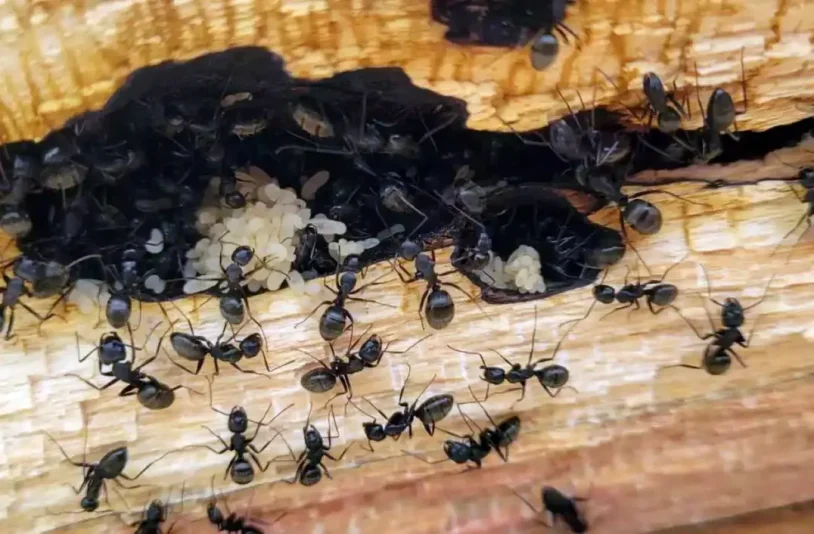
If you’ve noticed large black ants moving around your walls, windows, or kitchen at night, you’re probably dealing with carpenter ants. They may not look as frightening as termites, but they can still cause serious damage to the wood in your home if left unchecked.
Carpenter ants don’t actually eat wood. They tunnel through it to build their nests. The longer they stay, the more they quietly weaken beams, frames, and other key parts of your home. What starts as “just a few ants” can end up costing you a lot in repairs.
Ready to take control? Keep reading to learn how!
Jump to Section [Hide]
What are Carpenter Ants?
Carpenter ants are large ants measuring 1/4 inch to 5/8 inch long. They can be black, red, or a mix of both colors. Worker ants range from 3/16 inch to 1/2 inch in size, while queens grow up to an impressive 1 inch.
These ants do not eat wood but dig through it to build their nests. You might find them in walls, attics, ceilings, or hollow doors. Carpenter ant colonies can cause serious damage inside your home over time if left untreated.
6 Ways to Get Rid of Carpenter Ants
1. Use Toxic Baits
Mix one teaspoon of sugar with one teaspoon of milk and a poisonous gel bait. This creates a slow-acting toxic bait that ants carry back to their colony. Avoid spraying visible ants while using bait, as it can disrupt the process.
Use tamper-proof bait stations if you have pets or kids at home. For quick results, try Maxforce Fleet with Fipronil, which works in three to five days. A combo pack like Advance 375A and Maxforce Fleet saves money while targeting different ant needs, such as protein or sugar diets.
2. Apply Diatomaceous Earth
Drill 1-inch holes every 6 inches into walls or wooden areas. Puff diatomaceous earth dust inside these holes to target hidden nests.
Spread it along ant trails, crawl spaces, and near entry points. It is safe for pets and kids, but keep dust out of the air to avoid breathing it.
3. Treat Nests with Direct Dusting
Apply insecticide dust, such as D-Fense, directly to the nests. Focus on areas where ants are active, like cracks or holes in wood. Wear safety gear, such as gloves, long sleeves, and goggles, when handling dust.
Licensed applicators can use stronger Restricted-Use Pesticides (RUP) for tough nests. Always read and follow product labels carefully. This ensures safe use and protects against overuse of pesticides.
4. Try Boric Acid Solutions
Mix 1/3 sugar with 2/3 boric acid to make an effective bait. Place this mixture in small bottle caps along carpenter ant trails. The sugar attracts the ants, while the boric acid kills them.
Position these baits where ants are often seen, like windows or baseboards. Boric acid works well because it slowly damages the ant’s digestive system, giving them time to carry it back to their colony.
This helps target the ant queen and eliminate the entire nest effectively.
5. Vinegar and Water Spray
Mix equal parts of vinegar and water in a spray bottle. Spray this solution on areas where carpenter ants travel, like windowsills, countertops, and door frames.
The vinegar masks scent trails left by ants. It also confuses their navigation, making it harder for them to find their way back. Use this daily until you see fewer ants. Keep pets and kids away during application since the smell can be strong.
This simple pest control method works best when paired with other ant management steps.
6. Essential Oils like Tea Tree or Peppermint
Use tea tree or peppermint oils to disrupt ant trails. These essential oils break their pheromone paths, making it hard for them to find food. Dip cotton balls in the oil and wipe surfaces where you see ants.
You can also mix a few drops with water and spray it around entry points. This works well in areas where toxic insecticides aren’t safe, like kitchens or near pets. It’s natural, effective, and keeps your home smelling fresh.
Inspecting for Carpenter Ant Nests
Check for signs like wood shavings or ant trails to spot their nests. Finding these clues early can save you trouble.
Look for Frass
Search for small piles of frass near wood surfaces. Frass looks like light wood shavings, fine sawdust, or debris. These piles show where carpenter ants dig out their nests.
Check under hollow doors, window sills, and damaged timbers for frass. Finding it means you’re close to an ant colony hidden in the structure.
Check for Wood Damage
Look for signs of wood damage around your home. Carpenter ants hollow out wood to build their nests. Check for galleries, soft spots, or damp areas in structural wood. Damaged sections often feel spongy when pressed.
Inspect doors, walls, and cabinets closely. Hollow sounds when tapped can reveal hidden nests inside. Moisture is a big factor in attracting these pests. Focus on areas with water damage or rot that may have developed over time.
Follow Ant Trails
Follow the ants to find their home. Use bait like honeydew melon to attract them and track their path. Ants move in clear trails, usually from food back to their nest.
Watch closely between sunset and midnight during spring or summer. Carpenter ants can travel up to 100 yards while foraging. Their trail leads you directly to the colony, making it easier for targeted treatment.
How to Prevent Carpenter Ants from Returning
Keep your home dry and sealed tight—ants love damp spots and cracks. Clean up outside clutter to stop them from sneaking back in.
Remove Moisture Sources
Fix leaky pipes and faucets right away. Moisture attracts carpenter ants and helps wood decay. Check rain gutters for clogs to ensure proper drainage.
Replace wet or damaged wood fast. Damp areas give ants a perfect spot to nest. Maintain your roof and insulation to avoid water damage.
Seal Cracks and Gaps in Structures
Seal cracks with caulk to block entry points for carpenter ants. Use weather-resistant caulks on windows, doors, and any other gaps around your home. Pay extra attention to spots near roofs, siding, or foundations where ants might sneak inside.
Install screens on all windows and doors. Repair exterior surfaces, such as damaged wood or broken bricks, that could provide pathways for pests. Check carefully for tiny holes in walls or floors where ants can enter.
Taking these steps stops them from invading your home again and again!
Clear Natural Debris Around the House
Clean up wood piles, stumps, and roots near your home. These attract carpenter ants and give them places to nest.
Trim tree branches touching the house. Remove weeds or fallen leaves near the perimeter. Provide clear firewood storage close to structures to improve pest management.
Store Food Properly and Fix Leaks
Keep food in sealed containers to stop carpenter ants from finding it. Ants can smell crumbs and spills, so wipe counters, sweep floors, and clean up quickly after meals. Do not leave pet food out overnight.
Fixing leaks is just as important. Carpenter ants love damp wood caused by water damage. Repair dripping faucets and broken pipes right away. Check under sinks or near windows for signs of moisture seeping in.
Final Tips
Getting rid of carpenter ants takes work, but it’s doable. Focus on finding their nests and treating them directly.
Use simple tools like baits, sprays, or dusting powders. Afterward, seal cracks and clear wood debris to stop them from returning.
With these steps, your home can be ant-free!