Share
Share Facebook
  Twitter
  LinkedIn
  Pinterest
  Email
Email 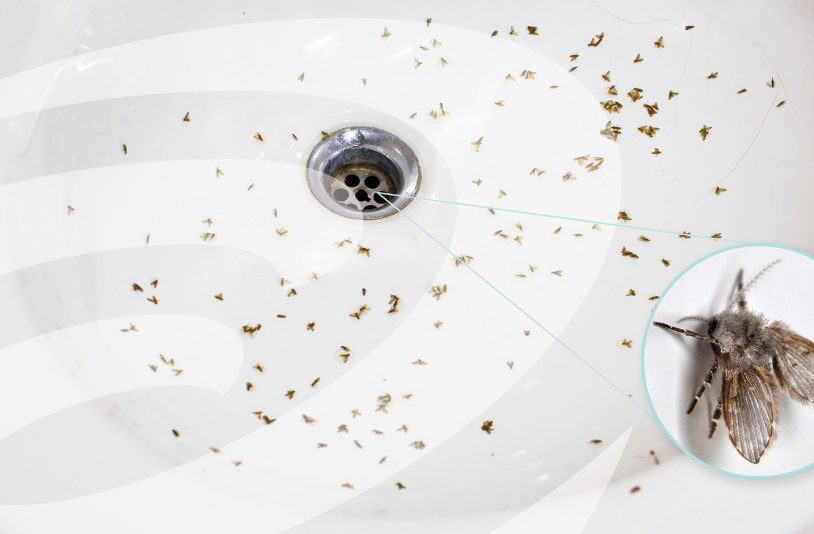
Drain flies are small, bothersome insects that often appear near sinks, showers, or drains. If you see tiny flying bugs in your home, you likely want to get rid of them as soon as possible.
These insects thrive in damp areas with buildup. They lay eggs in the slimy residue inside pipes or near standing water. You can get rid of them by following a few simple steps.
This guide will show you how to clean your drains, remove flies, and prevent their return. Read on for easy and practical tips.
Jump to Section [Hide]
What Are Drain Flies?
Drain flies are small, fuzzy insects that live near moist areas. They thrive in dirty drains filled with organic matter, such as slime or gunk.
How to Identify Them
They look like tiny, fuzzy moths. Adult drain flies are 2–4 mm long and have two wings with clear veins. Their color ranges from gray to tan, sometimes with spots on their wings.
You will usually find them near sinks, showers, or floor drains. Unlike fruit flies, they don’t gather around food; they stick close to pipes and damp areas. Inside the drains, you might see small black worms—these are their larvae feeding on organic matter.
Common Places They Breed
Drain flies often breed in moist, dark places. Household drains with organic buildup are a prime spot for growth. Floor drains, unused guest bathroom showers, and kitchen sinks can attract them.
They thrive in soap scum and sludge inside pipes.
Leaking pipes or wet areas under sink cabinets create perfect conditions for sewer gnats. Clogged gutters and potted plants with soggy soil can also become breeding grounds. Garbage disposal units with leftover food waste are another shared place to check.
Why They’re a Problem
Drain flies can quickly become a nuisance in your home. They breed in moist, organic buildup within drains or pipes, so their presence often indicates dirty plumbing. Seeing them around sinks and showers is unsightly and frustrating.
They can multiply fast if not managed. A breeding site with stagnant water provides them with the ideal environment to thrive. In some cases, their appearance may indicate larger issues, such as broken pipes or hidden leaks in your home’s structure.
Signs of a Drain Fly Infestation
Small flies hovering near your sink or shower could indicate a problem. Watch for additional clues that indicate these pests are in your drains.
Visual Clues Around Drains
Look closely at the drains around your sink, shower, or bathtub. Adult drain flies often hover near these areas. You might spot tiny moth-like insects with fuzzy wings resting on surfaces nearby.
Larvae may appear as small black worms within the drains. They stick to the walls of pipes where there’s organic buildup. If you notice gunk or sludge around a drain opening, this could also indicate their breeding ground.
Noticing Adult Flies Near Sinks or Showers
Adult drain flies often rest on walls or counters near sinks and showers. They may hover over drains or pipes, especially in the evening. These moth-like insects like moist spots for breeding.
To monitor them, cover the drain with clear tape or a plastic bag overnight. Trapped sewer flies will adhere to the surface upon emergence. You can also use fly paper nearby to catch active adults.
This helps confirm an infestation quickly.
Smell or Organic Buildup in Pipes
A foul smell near drains often means organic buildup in your pipes. Soap scum, algae, fungi, and food debris can collect over time. This sludge becomes a breeding spot for drain fly larvae.
Standing water worsens the problem by attracting more bacteria.
Check sinks, showers, and floor drains for any odors or slow drainage. Organic matter trapped in pipes is the primary cause of these issues. Removing this buildup promptly can prevent flies from laying eggs while keeping your home fresh and pest-free!
How to Get Rid of Drain Flies
Clean and Disinfect Your Drains
Dirty drains attract drain flies. Cleaning them removes the buildup they love.
1. Flush with Boiling Water
Pour boiling water down the drain to kill larvae and flush out debris. Use a large amount, not just one kettle, for better results. Do this daily for several days to break their breeding cycle.
Be careful with PVC pipes, as extreme heat can damage them. Boiling water works well on metal or ceramic drains, but avoid overdoing it if you’re unsure about your pipe material.
This simple step can significantly reduce the number of Clogmia albipunctata nests.
2. Use Baking Soda and Vinegar
Mix 1/2 cup of baking soda with 1 cup of vinegar. Pour the mixture into the drain and let it foam up. The reaction helps break down organic gunk that attracts moth flies.
Let it sit overnight in the pipes to disinfect and loosen buildup. In the morning, flush the drain with boiling water to clear out debris. This natural method works well for minor infestations or for regular maintenance against household pests such as drain flies.
3. Apply Enzyme-Based Drain Cleaners
Use enzyme-based drain cleaners to break down the organic film in your pipes. These products, such as Drain Clean 1L Liquid Enzyme Drain Cleaner and Peerless JAL 1L Bio Activ Drain Cleaner, are free of harsh chemicals.
Pour the solution directly into the problem drain and let it sit overnight.
Enzymes help digest the buildup where drain flies breed. Repeat regularly to keep drains clean and prevent future infestations. This method is safe for most plumbing systems and avoids damage caused by traditional chemical cleaners.
4. Scrub with a Drain Brush to Remove Slime and Gunk
Scrub the inside of the drain with a stiff drain brush. Focus on areas such as the P-trap, where slime and gunk accumulate most. Move the brush back and forth to dislodge organic matter trapped in the pipe walls.
This scrubbing removes food for larvae and clears breeding spots. Flush away loosened debris with hot water after cleaning. This step can prevent drain flies from returning while keeping pipes free of clogs.
Trap and Kill Adult Drain Flies
Use simple traps, such as vinegar or sticky tape, to catch flies.
5. Apple Cider Vinegar Trap
Place a small dish near the drain. Mix apple cider vinegar, dish soap, and sugar. The sugar attracts the flies, and the vinegar lures them closer.
The dish soap breaks the surface tension. Flies sink and get trapped once they land on the liquid. This simple trap quickly reduces adult drain flies.
6. Sticky Tape Over Drain Openings
Cover the drain opening with clear sticky tape. Leave it overnight or for 24 hours. Adult flies will get stuck as they exit the drain.
Check the tape for caught flies. This helps confirm where they are breeding. Repeat this step if needed to track other drains. Use this simple method before trying stronger treatments, such as pesticides or enzyme-based cleaners.
7. DIY Plastic Cup Trap with Holes
Take a clear plastic cup. Coat the inside with vegetable oil or petroleum jelly. Poke small holes in the bottom of the cup.
Place the cup upside down over your drain at night. Drain flies will crawl out and get stuck in the cup’s sticky coating. Check it each morning to see if any flies are trapped. Replace it as needed until no more are caught!
8. Use of Commercial Fly Traps
Commercial fly traps can quickly catch adult drain flies. Sticky fly paper and UV-light traps are standard options. These tools attract the flies, trapping them so they can’t move around your home.
While these traps reduce the number of visible flies, they don’t fix the main problem. Drain flies breed in organic buildup inside pipes or drains. You’ll still need to clean those areas to stop future infestations.
Deep Cleaning Other Breeding Areas
Check spots where water sits or drains slowly. Scrub and clean these areas to remove filth and eggs.
9. Inspect and Clean Floor Drains
Inspect floor drains for signs of buildup or clogs. Drain flies prefer pipes with organic matter, so clean these areas regularly.
Use enzyme-based cleaners to break down grime in the drain. Pour boiling water to flush out debris and kill eggs. Scrub the inside of the pipe with a stiff-bristle brush to remove slime layers where psychodidae can breed.
Repeat this process every few weeks if necessary.
10. Check Under Sink Cabinets and Mop Buckets
Check under your sink for leaks or standing water. Drain flies love damp spots caused by dripping pipes. Fix any leaks immediately to prevent them from nesting there.
Empty mop buckets after each use. Water left in these can quickly attract drain flies. Dry the bucket thoroughly, and store it upside down to keep it clean and dry.
11. Clean Garbage Disposal Units
Garbage disposals hold food particles that attract drain flies. Clean them nicely to stop these pests. First, turn off the power to stay safe. Then, pour boiling water down the disposal to loosen waste.
Scrub inside with a long brush or an old toothbrush. Use baking soda and vinegar for extra cleaning power. Let it bubble for 15 minutes, then rinse with hot water again. Keep the blades sharp by grinding ice cubes and lemon peel regularly; this also freshens odors.
12. Sanitize Bathroom and Shower Drains
Clean bathroom and shower drains often to stop drain flies. Soap scum, hair, and organic debris build up over time. Use hot water to flush away loose gunk. Follow this with baking soda and vinegar to break down grime.
Scrub the inside of the pipes using a stiff drain brush to remove stubborn sludge. Enzyme-based cleaners are also effective, as they break down organic matter in the pipes. Do this weekly if you notice signs of buildup or smells coming from your drains.
Preventing Future Drain Fly Infestations
Stop drain flies from coming back with simple steps. Keep your drains clean and dry to prevent breeding.
Run Hot Water Daily Through Unused Drains
Pour hot water into drains that are not used often. This prevents water from stagnating and creating a breeding ground for drain flies.
Do this once every day to flush out organic buildup. Hot water helps clear slimy residue where diptera pests like to lay eggs. Keep your pipes healthy and odor-free with this simple step!
Keep Areas Around Drains Dry and Clean
Wipe up water near drains after every use. Moist areas attract drain flies and promote breeding.
Check for spills or leaks under sinks. Fix any dripping pipes immediately. Sweep away food crumbs, soap scum, or hair around drains daily. A dry, clean area prevents flies from laying eggs near drains.
Use a fan to improve ventilation if needed, especially in damp bathrooms or kitchens.
Repair Leaks and Improve Ventilation
Fix any leaks around drains quickly. Standing water attracts drain flies and provides a place for them to lay eggs. Check for drips under sinks, in pipes, or near floor drains. Tighten loose connections or replace damaged parts to stop the leaks.
Improve airflow in damp areas like bathrooms and kitchens. Use exhaust fans or open windows to reduce moisture buildup. Dry surfaces are less attractive to pests such as drain flies.
Better ventilation also prevents mold growth and keeps your home fresh.
Use Drain Covers When Not in Use
Place drain covers over unused drains. This stops adult flies from entering and laying eggs in the pipes. They act as a simple barrier to keep pests out.
Choose covers that fit tightly. Make sure they cover the entire opening without gaps. Clean them regularly to avoid buildup underneath.
When to Call a Professional Exterminator
Call a pest control expert if the drain flies keep coming back or there might be bigger plumbing issues… they can handle tough cases!
If Infestation Persists After DIY Methods
Persistent drain fly problems could mean hidden breeding areas or plumbing issues. DIY methods may not reach deep pipes or clogged sewage lines where these pests lay eggs. A professional exterminator can inspect and fix the source.
Experts provide deep cleaning to remove buildup you might miss. They use tools and treatments that are stronger than store-bought options.
Suspected Structural Drain or Sewage Issues
A drain fly problem that won’t go away may indicate larger issues. Broken pipes or leaks under slabs or crawl spaces can create ideal breeding grounds. These hidden damages may cause more flies to appear, even after cleaning.
Call a professional if you suspect structural damage. Experts can inspect your plumbing system and find the source of the infestation. They also clear clogs, improve drainage, and prevent costly repairs later.
Final Tips
Getting rid of drain flies is not hard if you stick to a plan. Clean your drains, trap the flies, and target their breeding spots. Keeping drains dry and fixing leaks will prevent recurrence.
If they don’t go away, call a pest expert for help. You’ll have a fly-free home in no time!