Share
Share Facebook
  Twitter
  LinkedIn
  Pinterest
  Email
Email 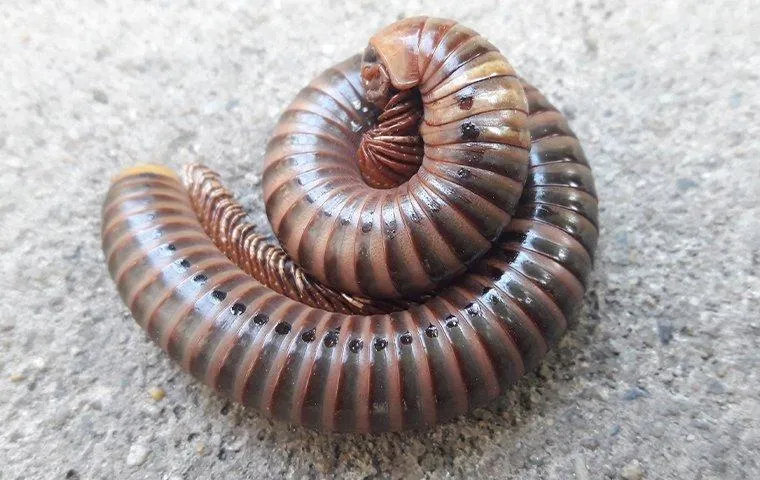
If you’ve ever walked into your bathroom, basement, or laundry room and spotted a long, slow-moving bug with what seems like a hundred tiny legs, that’s probably a millipede. Not exactly the kind of visitor anyone wants around.
Millipedes don’t bite, sting, or cause serious damage inside your home. The problem is that when they appear in large numbers, it can feel pretty unpleasant.
They usually come inside when it’s too wet outside, especially after heavy rain, and once they find a damp spot, they tend to stay.
This post will show you how to get rid of millipedes in your home with simple tips and tricks. Keep reading to learn more!
Jump to Section [Hide]
What Are Millipedes?
Millipedes are long, segmented creatures with many legs. Each body segment has two pairs of jointed legs, and the total can range from 80 to 400. Most millipedes grow about 1 to 2 inches long, but some species, like Narceus americanus, can reach up to 4 inches.
They usually appear brown, black, orange, or red. Millipedes move slowly in a wave-like style and curl into a coil when threatened. They eat damp, decaying plant material and help break down organic matter outside.
Some types include the black-and-yellow Apheloria virginiensis and the small Greenhouse Millipede, which is less than an inch long.
Why Millipedes Are in Your Home
They look for wet spots and dark places. Basements, crawl spaces, and garages attract them since they stay damp.
Cracks in windows or walls let them sneak inside. Heavy rain drives them in from the soggy ground. Drought can push them to seek cooler, moist air indoors, too.
Mulched areas or leaf piles near your house are like a millipede buffet! They eat decaying plants and love hiding among them. Too much moisture around outside walls makes it worse. Fixing this helps limit their entry points and reduces these invasions.
7 Simple Ways to Get Rid of Millipedes
Natural and DIY Treatment
1. Vacuum or sweep them up
Use a vacuum to collect millipedes, especially if you find many of them. After vacuuming, empty the bag or canister immediately. Seal the waste in a plastic bag and place it outside to prevent pests.
For small groups of millipedes, use a broom and dustpan instead. Wear gloves when handling them by hand, as they may release irritating secretions or odors as a defense. Remove dead ones promptly to avoid attracting pests, such as house centipedes and other insects, indoors.
Sticky traps can help monitor ongoing infestations, too!
2. Essential oil sprays
Peppermint and tea tree oils work well against millipedes. Dilute them with water, then spray along door thresholds, window sills, and cracks in the foundation.
These sprays repel without chemicals, keeping your home safe for people and pets. Reapply after rain or cleaning to stay effective. Test on a small surface first to avoid stains or damage.
3. Diatomaceous earth
Sprinkle food-grade diatomaceous earth along baseboards, cracks, and other entry points. It dehydrates millipedes by damaging their outer layers, leading to their death.
Use a thin layer in problem areas, such as basements or crawl spaces, for the best results. Reapply if it gets wet, as moisture reduces its effectiveness. Always wear a mask during application to avoid inhaling fine dust particles.
4. Reducing indoor humidity
Use dehumidifiers to keep your home’s moisture low. These work best in basements, crawl spaces, and near foundations. Sump pumps help remove standing water from these areas, too.
Fix any leaks from pipes, faucets, or air conditioning units quickly. Make sure gutters and downspouts are clean and that rainwater is directed away from the house. Install exhaust fans in kitchens and bathrooms to better control humidity.
Use a hygrometer to check that indoor humidity stays below 50%.
5. Improving ventilation
Open windows often to improve air circulation. Use exhaust fans in damp areas, such as bathrooms or basements.
Check that foundation vents are clear and working well. Inspect fans for blockages, too. Good airflow dries out spaces where millipedes hide or breed, making your home less inviting to them.
Chemical Treatment
6. Residual insecticide sprays
Residual insecticide sprays work well for millipede control. Apply them along baseboards, cracks, and entry points where millipedes might sneak in. Use products like Ortho Home Defense MAX Indoor Insect Barrier for lasting protection that can last weeks.
Focus on basements, garages, and crawl spaces when applying the spray. Only treat areas that pets or kids cannot reach. Follow all label instructions to stay safe. Reapply after cleaning or if the area gets wet again.
Spot treatments are better than spraying large areas since millipedes tend to gather in specific spots.
7. Outdoor perimeter treatments
Spray a liquid pesticide, like Ortho Home Defense, around your home’s foundation. Create a 3-foot barrier on the ground and spray 3 feet up the walls. Focus on treating doors, crawl space entrances, vents, and utility openings to block millipedes.
Reapply after heavy rain as needed.
Granular insecticides such as TERRO Ant Killer Plus work well for outdoor use, too. Water them into the soil around your house for better results. For cracks outside your foundation, apply insecticidal dust like TERRO Ant Dust to stop millipedes from sneaking in.
Removing mulch or leaf litter nearby also helps these treatments last longer while cutting down hiding spots!
Long-Term Prevention
Year-round moisture control
Use dehumidifiers or sump pumps to keep basements and crawl spaces dry. Fix leaks in pipes, faucets, and air conditioners quickly to avoid damp areas.
Inspect gutters often. Make sure downspouts move water away from the house. Avoid overwatering your lawn, and dethatch it as needed to reduce moisture buildup. Use a hygrometer to check that indoor humidity stays below 50%.
This helps keep millipedes out year-round.
Removing mulch, leaf litter, and wood piles
Clear mulch, leaf litter, and wood piles from around your home. Millipedes hide in these areas for food and moisture. Keep a gap of 12–18 inches between mulch or debris and your foundation.
Check compost piles, firewood stacks, and garden waste regularly. Don’t store firewood against the house. Pick up grass clippings after mowing to reduce millipede hiding spots. Clean outdoor debris regularly, especially during spring and fall, before rain arrives.
Improving yard drainage
Fix soggy spots in your yard with better drainage. Adjust sprinklers to stop overwatering and puddles near your home. Keep mulch and turf areas dry, as soaked ground attracts pests like millipedes.
Add gravel or regrade spots where water pools too much. Use splash blocks at downspout outlets to spread water further away from the foundation. Install French drains, if needed, in problem areas.
Check gutters often for clogs so rainwater flows freely.
Trimming plants away from the foundation
Keep plants trimmed back at least 12–18 inches from your home’s foundation. Overgrown branches or dense bushes trap moisture, making it easier for millipedes to thrive.
Prune low-hanging branches and remove shrubs close to the walls. This helps sunlight reach the area and keeps it dry. Clear space around the house, as this makes it easier to spot pests like millipedes during inspections.
Fixing gutters and downspouts
Clean the gutters often. Blocked gutters cause water to pool near your home’s foundation. This creates moisture, which attracts millipedes and other pests. Focus on spring and fall cleaning to remove leaves and debris.
Check downspouts for leaks or disconnections. Repair any issues quickly to avoid problems. Add or fix splash blocks to move water several feet from the house. If a gutter sags or tilts incorrectly, readjust it for proper drainage.
Good maintenance keeps your home dry and pest-free!
Final Tips
Getting rid of millipedes takes effort, but it works. Use simple tools like brooms or vacuums to remove them fast. Fix cracks and control moisture to keep them out for good.
Clear yard debris and improve drainage outside your home.
With regular care, you can prevent these pests from returning!