Share
Share Facebook
  Twitter
  LinkedIn
  Pinterest
  Email
Email 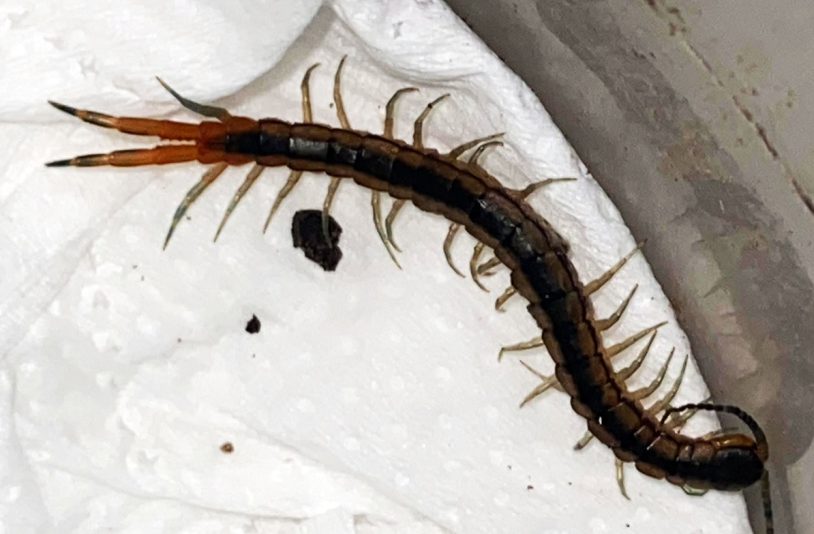
If you’ve spotted a long, many-legged bug scurrying across the wall, you’ve likely encountered a house centipede—and maybe even let out a little scream. They move fast, look a bit creepy, and are definitely not the kind of guests you want in your home.
House centipedes usually appear for two reasons: they like dark, damp places, and they’re hunting other bugs. So if you see them a lot, it means your home might be welcoming to other pests, too.
Ready to learn about how to get rid of centipedes? Keep reading!
Jump to Section [Hide]
What Are House Centipedes
House centipedes, or Scutigera coleoptrata, are common indoor pests. They have long, flat bodies with about 30 legs and striped patterns on their body and legs. Their colors range from black to brown to tan, with three dark stripes running down their backs.
These centipedes belong to the class Chilopoda. They don’t have wings but move quickly using their many legs. Their front legs double as fangs to inject venom into prey.
Though they are skilled hunters of other insects such as ants, cockroaches, spiders, and slugs, they can appear alarming indoors.
Why are house centipedes in your home?
House centipedes are inside because they follow food and moisture. They eat other pests like ants, roaches, and spiders. If you see them often, it may mean your home has many insects for them to hunt.
They also love damp areas with high humidity. Leaks in your crawlspace or basement can attract them. Weather conditions outside might push them indoors for shelter, too. Older homes with more gaps or cracks may give them easy entry points.
During rainstorms or cold weather, they might move indoors for shelter.
Where they typically hide indoors
Centipedes love damp and dark places. Basements, bathrooms, and closets are their favorite spots. They often hide under sinks or near pipes where moisture collects. You may also find them in crawl spaces or attics that stay humid.
Look for them in areas with lots of other pests. Dark corners behind baseboards or inside wall gaps are common hiding places, too.
Safety and Preparation Before Treatment
Keep your home safe before starting treatment. Protect everyone by using smart methods and proper tools.
Basic safety tips when using sprays, powders, or traps
Read product labels carefully before use. Follow all instructions for safety and proper application. Only use insecticides or traps that list centipedes as target pests.
Keep sprays, powders, and traps out of reach of children and pets. Avoid using them in areas where food is prepared or eaten. Apply diatomaceous earth or Borax along baseboards only in dry spaces to prevent messes.
Always wash your hands after handling these products.
Protecting children, pets, and sensitive individuals
Store all pesticides and traps where children and pets cannot reach them. Lock these items in a cabinet or place them on high shelves. Always read product labels carefully to ensure they are safe for use around sensitive individuals or animals.
Avoid using chemical treatments in areas where your kids or pets often play, such as carpets, nurseries, or pet beds. Keep window screens and door sweeps intact to block centipedes while reducing pesticide exposure inside the home.
Elevate potted plants so they don’t attract pests closer to children or curious pets. Remove outdoor leaf litter and mulch beds nearby to cut contact with harmful zones outside your house.
When to avoid certain products or DIY methods
Avoid pesticides that don’t mention centipedes on the label. They may not work and could harm you, your pets, or your kids. Keep insecticides away from poorly ventilated areas to avoid breathing toxic fumes.
Skip Borax or diatomaceous earth if children or pets might touch or eat it. Large house centipedes can bite when threatened, so don’t handle them directly. Test essential oil sprays for allergies before spraying near sensitive individuals.
7 Ways to Get Rid of House Centipedes
1. Vacuuming or catching centipedes
Use a vacuum with a hose attachment to suck up centipedes quickly. Check corners, baseboards, and behind furniture where they hide. Vacuuming also removes their moltings and traces of activity.
Dispose of the contents in an outdoor trash bin right away to stop any escape.
If you prefer to catch them, use glue traps near walls or in hidden areas. These will trap live centipedes for easy disposal. Replace traps regularly for best results. Both methods help reduce their numbers quickly and with minimal hassle.
2. Use insecticides
Choose insecticides that target centipedes. Raid Ant & Roach Killer 26 works well, killing on contact and lasting up to 13 weeks. Spray it in dark corners, baseboards, or areas where you’ve seen centipedes.
Raid MAX Perimeter Protection Auto Trigger offers even longer control. It creates a barrier for up to 18 months. Apply it along exterior foundation walls to stop them from entering your home.
Always follow label instructions for safety and best results, especially if kids or pets are around.
3. Set glue traps
Place glue traps in areas where you spot centipedes. Focus on damp spots, near water pipes, and along baseboards. Traps work well in bathrooms, basements, and kitchens. Use multiple traps if you have a large house or several floors.
Replace the traps often to keep them effective. These sticky boards help monitor centipede activity, too. They are safe and non-toxic compared to chemical sprays. You can also use them to confirm their presence even if you don’t see the pests directly.
4. Use essential oil sprays (e.g., peppermint, tea tree, eucalyptus)
Mix a few drops of peppermint, tea tree, or eucalyptus oil with water in a spray bottle. Shake well and spray on areas where centipedes often appear, like baseboards or dark corners.
These oils act as natural repellents and also help reduce other pests that centipedes eat. Test it first on a small spot to avoid stains. Reapply every few days for best results. Keep the spray away from kids, pets, and food surfaces for safety.
5. Seal cracks, gaps, and entry points
Check your windows, doors, and foundations for cracks or gaps. Seal these with caulk or spray foam to keep centipedes out. Make sure weather stripping and door sweeps are in good shape.
Replace damaged window screens if needed.
Inspect areas where pipes and wires enter the house. Seal openings around them with proper materials. Look for new gaps after storms or repairs, as they can let pests in. Regular maintenance helps stop infestations before they start!
6. Remove clutter and indoor hiding places
Clear out basements, closets, and storage areas. Piles of newspapers or magazines should go. Unused items attract prey insects that centipedes eat. Regularly clean under furniture and appliances to prevent hiding spots.
Store things in sealed containers instead of cardboard boxes. Cardboard can trap moisture and attract pests like centipedes. Keeping spaces organized makes cleaning and inspection easier.
Well-ventilated rooms leave fewer options for centipedes to hide!
7. Apply diatomaceous earth
Spread a thin layer of food-grade diatomaceous earth in damp areas, along baseboards, and other spots where centipedes hide. This non-toxic powder dehydrates and kills them on contact.
Reapply it after cleaning or if the area gets wet again.
Keep it out of reach of children and pets, as they may disturb the powder. Diatomaceous earth is effective against many crawling pests, not just house centipedes. Use this simple pest control method to reduce infestations indoors.
Control Methods You Can Use
1. Inspect your home and identify hotspots
Check basements, crawl spaces, and closets for centipedes. Look for translucent moltings or moving insects. These show where centipedes feed and hide.
Find areas with leaks or standing water. Inspect spots near decaying vegetation or rotting wood. Keep track of sightings to find patterns in activity.
2. Reduce humidity levels indoors
Use a dehumidifier to maintain your home’s humidity below 50%. This is particularly important in basements, crawlspaces, and attics. Repair leaks around pipes or windows to prevent excess moisture.
Insulate pipes to avoid dripping or causing condensation.
Enhance airflow by using fans or opening windows in damp rooms. Regularly inspect for water accumulation around windows and walls. If you notice rotting wood, replace it promptly. A dry home helps keep centipedes away and prevents other pests from moving in.
3. Eliminate their food sources by controlling other insects
Cut off their food sources by eliminating other pests. House centipedes eat ants, spiders, cockroaches, and silverfish. Focus on keeping these insects out to make your home less attractive to centipedes.
Seal food in tight containers and clean up crumbs right away. Clear garbage quickly and use sealed trash bins. Keep kitchen counters clean to avoid pest infestations. Regularly check for gaps or cracks where bugs could enter the house.
These steps will reduce insects inside your home, which helps control house centipedes too.
4. Use sticky barriers or tapes near baseboards and pipes
Place sticky barriers or tape along baseboards, near pipes, and around entry points. These stop centipedes from crawling into your living spaces.
Replace the tape often to keep it effective. Check for trapped pests too; this helps track activity or growing infestations. Sticky methods are safe if you prefer a non-toxic option to sprays.
Use these alongside other fixes, such as sealing cracks, for better results!
5. Remove outdoor debris, leaf litter, and wood piles near the home
Clear away wood piles, stones, and debris from around your home. These create dark, damp spots where centipedes love to hide.
Rake up leaf litter and clean out mulch beds by the foundation. Check often for new debris buildup, especially after storms or windy days. Keep outdoor storage areas neat and dry to stop pests from settling in.
6. Trim plants and shrubs away from exterior walls
Keep plants and shrubs trimmed back from your home. Leave a space of several inches between vegetation and exterior walls. Overgrown bushes or vines hold moisture, making it easier for centipedes to thrive.
They also give insects, which centipedes eat, a place to hide.
Prune trees and bushes often to improve airflow around the house. Remove ground cover or trailing vines that touch the foundation. A clear zone reduces the number of pests hiding near your walls.
Seasonal yard clean-ups help control plant growth and lower insect populations outside your home.
7. Improve drainage and repair leaks around the foundation
Fix leaks around your foundation to stop water from pooling. Look for cracks in walls or the base of your home and seal them with caulk or concrete filler. These cracks allow water inside, creating a moist space centipedes love.
Make sure rainwater flows away from your house. Clear gutters and check downspouts often, especially after storms. Grade the soil so it slopes away from the foundation. This prevents standing water from accumulating near your home’s base.
Lower moisture levels help keep centipedes out.
8. Check basements, crawl spaces, and garages for moisture issues
Inspect basements, crawl spaces, and garages for leaks or damp spots. These areas often trap moisture, which attracts house centipedes and other pests. Use a dehumidifier to keep the space dry.
Check for signs of water damage or mold buildup on walls and floors.
Fix any plumbing problems, such as leaky pipes or faulty sump pumps, right away. Keep items off the ground to reduce moisture build-up underneath them. Make sure these areas have good airflow by opening vents or using small fans if needed.
Regular checks can help you spot issues before they get worse.
Long-Term Prevention Tips
1. Maintain a clean, dry, and well-ventilated home
Keep your home dry to avoid centipedes. Use dehumidifiers to maintain humidity under 50%. Check plumbing for leaks, and fix them fast. Poor ventilation can trap moisture, so open windows or use fans in damp areas.
Clean floors and hidden spots often. Mold or mildew attracts bugs that centipedes eat. Address any signs of it quickly. Pay special attention to basements, attics, and crawl spaces.
These areas tend to hold moisture if not properly ventilated. A clean space leaves fewer hiding places for pests!
2. Keep up with regular cleaning and decluttering
Clear out clutter, such as old newspapers, magazines, and unused items. Store belongings in sealed containers instead of cardboard boxes. This keeps centipedes from hiding inside.
Clean behind furniture and appliances often. Check dark corners for buildup or pests as you clean. A tidy space is easier to inspect for structural pest problems, too! Regular cleaning removes centipede hiding spots and supports other pest control efforts.
3. Simple seasonal maintenance checklist to keep centipedes away
Inspect and seal cracks or gaps in walls, foundations, and windows every season. Replace worn weather stripping, screens, and door sweeps to block their entry.
Remove outdoor debris like leaf litter, mulch, and wood piles before winter or after storms. Trim plants near your home’s walls each spring and fall. Repair leaks or check for moisture after heavy rains to keep indoor areas dry.
When to Call a Professional Exterminator
Call an exterminator if centipedes keep coming back after trying DIY methods. Professionals find hidden nests and entry points that are hard to spot. They also use stronger treatments not sold in stores.
Reach out for help if you have a large infestation or severe allergies to bites. Experts can safely handle chemicals and give advice on protecting your home long-term. If the problem feels too big or unclear, it’s time for professional support.
Final Tips
Getting rid of house centipedes takes effort, but it is worth it. Focus on cleaning, sealing cracks, and reducing moisture. Use traps or sprays if needed. Keep your home dry and clutter-free to stop them from coming back.
If they still linger, hiring an exterminator can help!