Share
Share Facebook
  Twitter
  LinkedIn
  Pinterest
  Email
Email 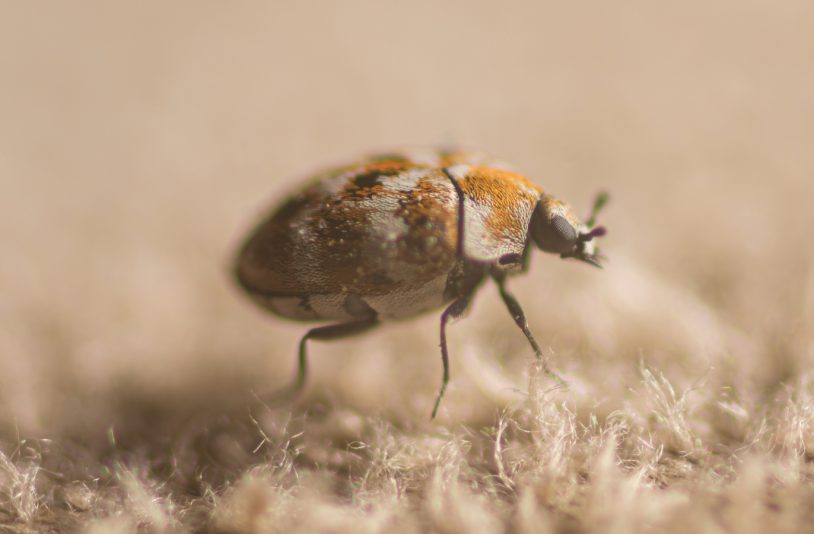
Carpet beetles are one of those hidden pests that can cause big problems before you even notice them. Their tiny larvae feed on natural fabrics like wool, silk, and leather, leaving holes behind.
Carpet beetles don’t just live in rugs. They hide in furniture, closets, and other dark spots. Learning how to get rid of carpet beetles takes some effort, but it is totally possible with the proper steps.
In this guide, you’ll find tips for identifying them, cleaning infested areas, and preventing future problems.
Don’t wait for more damage. Start solving the problem now!
Jump to Section [Hide]
What are Carpet Beetles?
Carpet beetles are tiny insects that can invade your home. They feed on natural fibers like wool, silk, and cotton.
Common Types: Varied, Furniture, and Black Carpet Beetles
Varied carpet beetles, also called Anthrenus verbasci, are tiny, about 1/10 inch long. They have black bodies with white, brown, and dark yellow scales. As these bugs age, they may appear solid brown or black due to the loss of their scales.
Furniture carpet beetles (Anthrenus flavipes) are rounder than varied carpet beetles. Their colors include black spots with white and orange-brown scales. Black carpet beetles (Attagenus unicolor) are shiny and larger, at 1/8 to 3/16 inch long.
Their larvae can grow up to 5/16 inch and have stiff hairs with a tuft at the end. These pests often damage stored products in dry areas, such as desert regions.
Lifecycle: From Egg to Adult
Female carpet beetles lay eggs on food like wool and fur. Varied carpet beetles can lay about 40 eggs, while furniture types may lay around 60. Black carpet beetles top the list with nearly 90 eggs.
These eggs hatch in as little as 6 days or as long as 20 days.
Once hatched, larvae feed for months or even years, depending on the type. For example, varied larvae last up to 630 days, while black ones range from 166 to 330 days. Larvae eventually pupate into adults within a few weeks.
Adults typically appear during spring or early summer near windows indoors. Females live longer than males but rarely exceed six weeks of life after becoming adults.
How to Identify a Carpet Beetle Problem
Spotting carpet beetles early can help prevent damage to your home. Watch for clues like fabric wear, larval skins, or tiny pests crawling around.
Carpet Beetle Larvae vs. Adults
Carpet beetle larvae look fuzzy or hairy and are longer than adults. Varied carpet beetle larvae have tufts of upright hair, while black carpet beetle larvae have stiff bristles with a pointed tail.
They can grow up to 5/16 inch and shine in shades from light brown to black.
Adult carpet beetles are round, small, and smooth. They measure about 1/8 to 1/10 inch long and have short antennae. Their colors vary from solid black to mixed patterns of white, yellow, and brown.
While larvae damage fabrics such as wool or linen, adults often appear near windows, searching for pollen.
Signs of Infestation
Tiny holes in carpets, clothing, or fabrics mean beetles are feeding. You may notice brown cast skins left behind by larvae near furniture or storage areas.
Fecal pellets that look like salt grains often appear around infested items. Dead bugs close to windows suggest they entered through light sources. Spotting live larvae or eggs in dark corners is another warning sign.
Damage to Natural Fabrics and Carpets
Carpet beetle larvae feed on wool, silk, leather, and feathers. They leave large, uneven holes in fabrics. Unlike moths, which make many small holes, larvae create messy damage in bigger patches.
They avoid synthetic fibers but can ruin blends containing natural materials. Larvae may also eat animal hair or felt padding inside carpets and furniture. Infestations can even harm piano felts, altering the sound quality.
Presence of Shed Skins and Fecal Pellets
Larvae leave behind brown, shell-like shed skins. These appear near areas where they feed. Check carpets, rugs, or fabrics for these signs.
Fecal pellets from larvae look like tiny grains of salt. You may find them close to infested materials. Both are clear signs of active infestation and must be treated quickly.
Finding Live Larvae or Beetles
Check dark spaces like under furniture, in closets, or behind baseboards. Larvae prefer these hidden spots and stay away from light.
Look near windows and on windowsills for adult beetles since they are drawn to light. Use sticky pheromone traps to monitor for live beetles in your home. Check the traps one to two times per week to quickly spot infestation areas.
Where Carpet Beetles Hide
Carpet beetles can hide in tiny, hard-to-reach spots around your home. They often stay near fabrics, cracks, and dark corners—making them tricky to spot at first!
Common Hiding Spots in the Home
Beetles love dark, quiet places. Look in drawers, closets, and behind heavy furniture. Baseboards and attics also offer great hiding spots for them. They often settle in pantries or unused storage areas.
Infested rugs, curtains, and upholstered furniture attract them too. Larvae prefer dark storage spaces, such as basements or cardboard boxes. Beetles can even damage felt parts inside pianos! Use sticky traps to find where they hide most effectively.
High-Risk Items and Materials
Wool, silk, leather, fur, and feathers are magnets for carpet beetles. These natural fibers attract both adults and larvae. Stored woolens or furs that sit untouched for months face the highest risk.
Dirty fabrics also draw these pests. Sweat stains or food crumbs on clothes make them even more tempting to larvae. Untreated animal hair in rug pads or carpets becomes a hidden home too.
Inspect rugs, drapes, and upholstery often if they contain natural fibers like wool or silk.
Step-by-Step Guide to Eliminate Carpet Beetles
Getting rid of carpet beetles takes effort, but it’s manageable. Follow simple steps to clean your home and protect your belongings—start today!
Step 1: Deep Vacuuming of Carpets, Furniture, and Cracks
Vacuum all carpets, rugs, and furniture thoroughly. Focus on corners, baseboards, cracks, and lint-collecting areas. Use the nozzle attachment to reach tight spots under heavy furniture or along floor edges.
Pay extra attention to storage spaces where dust gathers.
Empty the vacuum bag or canister outside right after cleaning. This stops larvae or eggs from re-entering your home. Regular deep vacuuming removes carpet beetle eggs, shed skins, fecal pellets, food sources, and live pests hiding in crevices.
Step 2: Wash Infested Fabrics and Linens in Hot Water
Wash all infested fabrics, clothing, and linens in hot water. Set the washing machine to at least 120°F (49°C). This kills carpet beetles in every life stage. Soak items for over 30 minutes for better results.
For delicate fabrics or items you can’t wash, choose dry cleaning instead. Always clean your clothes and linens before storing them in airtight containers. This keeps pests from returning later.
Step 3: Steam Clean Upholstery, Curtains, and Rugs
Use a high-heat steamer to clean upholstery, curtains, and rugs. The steam kills carpet beetle eggs and larvae hidden deep in fabrics. Focus on heavily infested spots for better results.
Dry everything thoroughly after cleaning to prevent mold or mildew. Consider professional help for delicate items like vintage rugs or silk curtains.
Step 4: Use Diatomaceous Earth or Boric Acid on Affected Areas
Sprinkle food-grade diatomaceous earth on carpets, rugs, or cracks where beetles hide. Keep it overnight to kill larvae and adults by drying them out. Vacuum thoroughly the next day to remove dust and dead pests.
Spread boric acid on fabrics, furniture, and infested spots for several hours. It works like a natural insecticide, but you should stay away from kids and pets. Both options are safe alternatives to harsh chemicals for pest control.
Step 5: Spray Vinegar and Water to Remove Pheromone Trails
Mix equal parts white vinegar and water in a spray bottle. Spray this solution on fabrics, carpets, drawers, and shelves. Test it on a small area first to avoid damage.
Vinegar kills carpet beetles and larvae when sprayed directly. It also removes the pheromone trails they leave behind. This helps prevent them from returning or attracting others to the same spots.
Use it regularly in closets and storage areas for extra protection against re-infestation.
Step 6: Apply Insecticides (Permethrin-Based) for Severe Infestations
Use permethrin-based insecticides for spot treatments. Spray along baseboards, in cracks, and on infested areas. Follow label instructions closely to ensure safety. Keep children and pets away while applying the product.
Do not spray clothing, bedding, or food surfaces.
In hard-to-reach spaces such as attics or wall voids, use insecticidal dust, such as silica aerogel (e.g., CimeXa). If dealing with severe infestations, professionals may use resin strips containing dichlorvos (DDVP).
These products are restricted to licensed pest control experts only. Always take precautions to avoid exposure during application.
Natural vs. Chemical Treatments
Natural remedies work well for small infestations and are safer for pets. Chemical options, like insecticides, tackle severe problems quickly.
Pros and Cons of Natural Remedies
Natural remedies are safer for kids, pets, and sensitive spaces. Diatomaceous earth and boric acid kill carpet beetles without harming humans or animals when used correctly. Vinegar solutions work well against larvae and pheromone trails but might damage delicate surfaces.
These methods take longer to show results than chemicals. Baking soda dehydrates some larvae, but must pair with frequent cleaning for full effect. Heat or freezing treatments need specific tools, making them harder to use at home.
While effective, thorough cleanup is essential after applying these dusts or sprays, such as silicon dioxide.
When to Consider Chemical Solutions
Use chemical solutions if you have a severe carpet beetle infestation. They work well when natural pest control methods fail to remove the problem.
Choose permethrin-based sprays for spot treatments in hard-to-reach places. Never spray on beds or clothing. Always follow product labels for safety, especially around pets and children.
For airtight containers, professionals may use dichlorvos (DDVP) resin strips, but DDVP is harmful to humans. Avoid using vapor insecticides like PDB or DDVP in closets or living spaces.
How to Prevent Carpet Beetle Infestations
Stop carpet beetles from invading by cutting off their hiding spots. Keep your home clean and block entry points—they hate a tidy space!
Inspect and Clean New or Secondhand Items Before Bringing Them Indoors
Check cut flowers, furniture, and clothing for adult beetles or larvae before taking them inside. Look closely at secondhand items for lint, hair, dead bugs, or debris that could hide pests.
Wash new and used fabrics in hot water before storing them. Use sticky traps to catch any carpet beetles on items like rugs or couches. This helps stop infestations from spreading indoors.
Seal Entry Points Around Windows, Doors, and Vents
Fix holes or gaps in window screens, doors, and vents to keep beetles out. Use caulk to seal cracks around windows and doors. Add weatherstripping if there are spaces along edges.
Replace broken screens quickly to block entry points. Check windowsills often for adult carpet beetles trying to get inside.
Store Clothing and Fabrics in Airtight Containers
Keep your clothes and fabrics safe by using airtight containers. These prevent carpet beetles from entering and laying eggs. Choose plastic bins, trunks, or garment bags with tight lids.
Avoid closets, since they are not sufficiently sealed to keep pests out.
Wash or dry clean all items before storing them. This kills any hidden larvae or eggs. Use paper layers inside the containers for added protection. Seal holes or cracks in storage boxes with tape to prevent tiny pests from entering.
Regularly Clean and Declutter Storage Areas
Vacuum storage areas, closets, and unused spaces often. This removes lint, hair, dead bugs, and debris that carpet beetles eat. Don’t forget corners and dark spots.
Inspect woolens, linens, or furs once a year. Air them out in sunlight to kill hidden larvae or eggs. Throw away vacuum bags right after cleaning infested zones to avoid pest spread.
Maintain Good Hygiene and Vacuum Frequently
Clean your home often to stop carpet beetles. Wash fabrics with hot water and remove food stains or sweat from clothing. Keep carpets, rugs, and furniture free of crumbs or dirt that attract pests.
Use a vacuum regularly on floors, in cracks, and under furniture. Pay special attention to corners where beetles hide. Declutter storage spaces, too; larvae thrive in piles of old clothes or papers.
Regular cleaning helps spot infestations early before they worsen!
When to Call a Pest Control Professional
Sometimes, infestations grow too large to handle alone. A pest control expert can solve the issue quickly and safely.
Signs You Need Expert Help
Finding live larvae or beetles even after cleaning and treatment means you might need expert help. Infestations spreading to attics, wall voids, or multiple rooms can also signal a bigger problem.
Damage to valuable items like heritage rugs, furs, or pianos is another warning sign. If you experience severe skin irritation from larval hairs, call an exterminator quickly. For commercial spaces with collections or rare objects, professional pest management is essential.
What to Expect from a Professional Treatment
A professional will scrutinize your home. They will find the sources of the infestation, such as nests or high-risk spots. After that, they make a focused treatment plan for your problem.
Experts often use stronger pesticides, such as bifenthrin or DDVP resin strips, which are not sold to the public.
Fumigation may be used in severe cases. This might involve sealing rooms or containers to kill beetles at every stage—eggs, larvae, pupae, and adults. Professionals ensure delicate items get special care during treatment, too.
Some services even offer insurance for added peace of mind!
Frequently Asked Questions
Got questions about carpet beetles? Here are some quick answers to help you better understand these pests.
Are Carpet Beetles Harmful to Humans?
Carpet beetles do not bite or spread diseases. Their larval hairs, though, can irritate your skin. This may cause itchy rashes in some people.
If you’re sensitive, you might sneeze or cough near an infestation. Watery eyes and mild allergic reactions are also common symptoms. Though they are a nuisance, carpet beetles aren’t a significant health risk for humans.
Do Carpet Beetles Bite?
Carpet beetles don’t bite people. The larvae cause damage by feeding on natural fabrics such as wool, silk, and fur. If your skin gets itchy or irritated, it could be from contact with their tiny hairs and not a bite.
These pests are different from bed bugs or spider bites. You might notice itching after touching infested items where larvae shed skins or leave behind hair fibers. Washing affected fabrics in hot water can help remove these irritants quickly.
Can Carpet Beetles Infest a Clean House?
Yes, they can. Even clean homes may have hidden dangers like pet hair, lint, or dead bugs. These items attract dermestid beetles. Natural fabrics and animal products also provide food sources for them.
Gaps in windows, doors, or vents let these pests enter your home easily. Once inside, they lay eggs on carpets or upholstery. Keeping your home spotless helps lower the risk, but does not guarantee safety from infestation by household pests.
Final Tips
Getting rid of carpet beetles takes effort, but it’s worth it. Clean your home deeply, wash fabrics in hot water, and seal off entry points. Use natural solutions or insecticides if needed.
Keep up with cleaning to stop them from coming back. If the problem continues, a pest control expert can help!