Share
Share Facebook
  Twitter
  LinkedIn
  Pinterest
  Email
Email 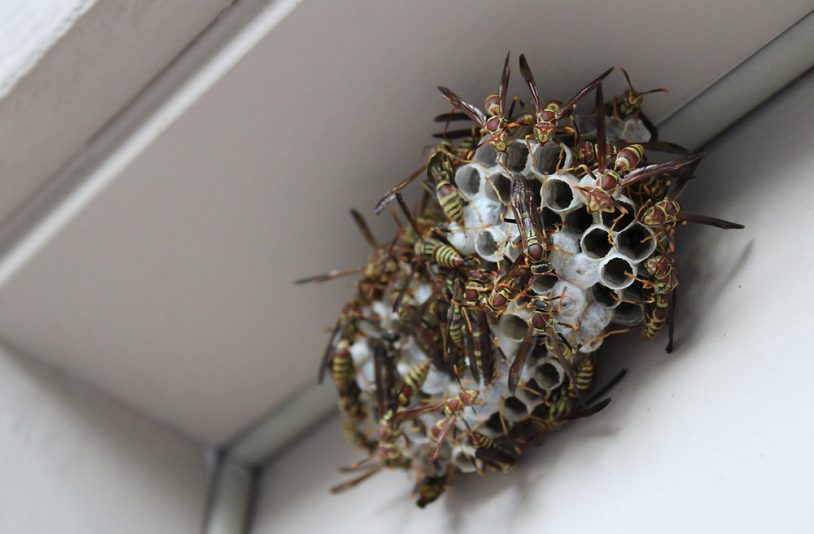
Wasps can turn your peaceful yard into a stressful space. Their nests, buzzing sounds, and stingers make many people nervous. If they are near garbage cans or your home, the problem gets worse.
Did you know that wasps are attracted to sweet scents and standing water? This is why they often gather around open drinks or damp spots in your yard.
This post will show you how to get rid of wasps safely. You’ll learn simple tips, ways to use products like soapy water sprays, and ideas to prevent them from coming back. Keep reading to deal with those pests now!
Jump to Section [Hide]
Signs of a Wasp Infestation
You might see wasps flying around windows, roofs, or near pipes. This can mean a nest is nearby. Look for nests in eaves, gutters, attics, barns, or sheds. Paper wasp nests are umbrella-shaped with open hexagon cells.
Yellow jacket nests resemble paper envelopes and may hang from trees or be hidden in underground holes.
Hornet nests are gray, pear-shaped, and have a single opening at the bottom. They often hang from trees or hide in wall spaces. Wasps also gather near sweet-smelling sources such as flowers, fruit trees, open garbage cans, or birdbaths.
If you notice these signs together, it’s time to check your home for an infestation!
Safe Methods to Get Rid of Wasps
Dealing with wasps can be challenging, but there are safe options. Try simple tools and methods to keep these stinging bugs away!
Soapy Water Spray
Mix 2 tablespoons of dish soap with water in a spray bottle. Spray this soapy mixture directly on wasps or their nests. The soap clogs their airways and suffocates them quickly.
This method works well for small paper wasp nests or lone yellow jackets. It is natural and free of harsh chemicals, making it safer for pollinators such as honeybees and bumblebees. Wear thick clothes to protect yourself while spraying.
Avoid using the spray near outlets to prevent electrical and water hazards.
DIY Wasp Traps with Sweet Bait
Cut a plastic bottle in half and flip the top to make a funnel. Fill the bottom with sugar water, vinegar, or rotten fruit. Wasps will crawl inside but can’t escape.
Place your trap away from where people gather. This keeps wasps busy far from you. Sweet baits, such as sugary drinks or citrus fruits, work best for stinging insects like yellowjackets and paper wasps.
Smoke to Evict Wasps
Use smoke to drive the wasps out of their nest. The smoke interrupts their breathing and confuses them. It works well for nests in trees or open areas, but not near buildings or flammable materials.
Light a small fire in a safe spot under the nest. Let it create enough smoke to reach the hive.
Windy days are bad for this method because the smoke drifts away fast. Always follow local fire rules before starting any outdoor burning. Keep water nearby to stop fires from spreading.
This is an old but effective method for outdoor pest control.
Commercial Wasp Sprays
Commercial wasp sprays are quick and effective. Raid Wasp & Hornet Killer 33 can spray up to 22 feet, keeping you at a safe distance. It also resists electricity up to 32,500 volts.
Another option is Green Diamond 350g Wasp Insecticide Nest Killer. It works well on paper wasps and allows you to spray from a distance.
Use sprays early in the morning or late evening when wasps are less active. Always follow label directions for safety, and wear long-sleeved gloves during use. Raid Flying Insect Killer kills on contact without leaving strong odors behind.
Spray while standing away from the nest and face the wind for added protection!
Professional Pest Control Services
Professional pest control experts handle big or tricky wasp nests. They use special tools and strong insecticides not sold in stores. If the nest is inside walls or high up in trees, they can safely remove it without damage.
Call a trained service if you face risks such as severe allergies or a nest near home entry points. Experts also prevent future infestations by treating problem spots effectively. If the insects are bees instead of wasps, contact a beekeeper for safe removal to protect bee colonies.
Preventing Future Wasp Infestations
Keep wasps away by making your home less inviting. Take simple steps to block their access and remove the factors that attract them.
Seal Entry Points
Close cracks and gaps in walls, roofing, attics, basements, and wall cavities. Use caulk or sealant to quickly block these openings.
Cover vents and pipes with screens or mesh to stop wasps from building hives. Check after storms for new damage or holes that need fixing.
Keep Food and Trash Covered
Keep food sealed to prevent wasp attraction. Open food, drinks, or sugary snacks can quickly draw them in. Wasps love rotting smells, too. Always use tight lids on trash cans inside and outside your home.
Clean up crumbs and spills quickly. Don’t leave scraps near outdoor tables or grills. If a wasp finds easy food, it may keep coming back with friends! Keeping spaces clean helps prevent nests nearby.
Plant Natural Wasp Repellents
Plant mint, citronella, peppermint, eucalyptus, thyme, or lemongrass in your garden. These plants give off strong scents that repel wasps. Wasps dislike citrus smells, too. Lemon and orange trees or potted plants can help keep them away.
Place these plants near patios, doors, or windows to block entry points. Citronella works well in gardens and outdoor spaces as a natural deterrent. Using repellent plants is eco-friendly and safe for pets and children, while helping prevent wasps over the long term.
Use Essential Oils and Repellents
Peppermint and lemongrass oils are effective at keeping wasps away. Spray these oils around doors, windows, and other entry points. Avoid spraying the oils directly on wasps to prevent stings.
Reapply often as the oils evaporate quickly. Be cautious around pets or children, as some essential oils can irritate their skin or eyes. Use this method alongside sealing entry points to better control European hornets or bald-faced hornets.
Safety Tips When Dealing with Wasps
Treat nests at dusk or dawn. Wasps are less active during these times and less likely to sting you. Wear thick clothing, gloves, and long sleeves to protect your skin from stings.
Always have someone nearby in case of an emergency. Stand upwind when spraying nests so chemicals don’t blow back on you. Avoid using water-based sprays near outlets to prevent electrical hazards.
Never spray wasps directly; this can make them angry and attack you.
When to Call a Professional
Contact a professional if you see a large nest or one in a hard-to-reach spot. Areas such as wall cavities, tall trees, and the interior of your home’s structure require expert care. Professionals use specialized tools and insecticides to ensure safe wasp control.
Call for help if someone at home is allergic to stings. Allergic reactions can be life-threatening. If you suspect bees instead of wasps, reach out to a beekeeper instead of pest control services.
Experts also share tips to prevent future infestations, saving you time and effort.
Final Tips
Getting rid of wasps takes patience and care. Use safe methods, such as soapy water or traps, to handle small nests. For bigger problems, call a pest control expert. Protect your home by sealing gaps and keeping food covered.
Stay calm, stay safe, and keep wasps away!