Share
Share Facebook
  Twitter
  LinkedIn
  Pinterest
  Email
Email 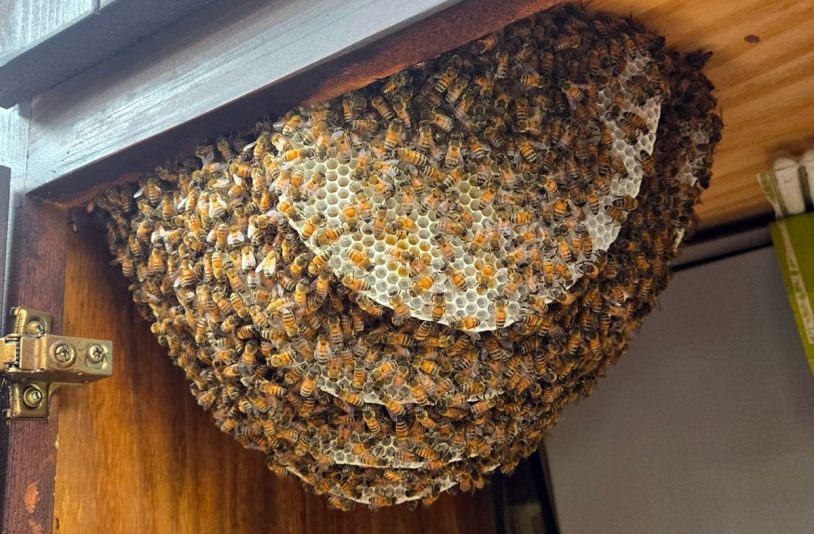
Bees play a vital role in the environment, but they can be unwelcome when they start buzzing around your front door, deck, or even inside your walls. If you’ve seen more bees near your home, it can be stressful—especially if you’re concerned about stings or have kids and pets nearby.
The challenge is finding a way to remove bees without hurting yourself, your property, or the bees when possible. Often, they’re just in the wrong place at the wrong time, and there are safe and humane ways to deal with them.
Ready to learn some helpful tips? Keep reading!
Jump to Section [Hide]
Safety Precautions Before Bee Removal
Bees can sting when they feel threatened, so take care while handling them. Focus on staying safe before starting any removal steps.
Wearing protective clothing
Wear a bee suit to stay safe. Use long-sleeved, light-colored coveralls. Dark colors can upset bees. Tuck your pants into high boots or seal them with tape. Gloves will shield your hands from stings.
Cover your face with a bee veil and hat. These keep bees from stinging around your eyes or head. Avoid perfumes, as scents draw in worker bees. Protective clothing is essential for safe hive removal or handling stinging insects like Africanized honey bees and hornets at night or during the day!
Keeping children and pets away
Keep kids and pets far from bee swarms or nests. Swarms often leave in 1-2 days, but staying away lowers the risk of bee stings. Some swarms, about 1 in 50, can be protective and may harm anyone too close.
Set a safety zone of around 300 yards to play it safe with aggressive bees like Africanized honey bees (AHBs). Pets wandering near hives can bother the colony, which can lead to attacks. Supervision helps prevent accidents involving curious children or animals near trouble spots such as chimneys or hidden hive areas.
6 Ways to Get Rid of Bees
1. Using a vacuum cleaner for bee removal
Use a vacuum cleaner with a soft attachment to carefully collect bees. This method keeps you safe from stings while avoiding harm to the bees. Once collected, release them outside near flowers or greenery, far from your home.
Vacuuming works well for stray bees trapped indoors after closing entry points. It’s pesticide-free and humane, making it a good choice for bee removal without harsh chemicals. Be gentle during the process to ensure their safety.
2. Making a homemade bee spray
Mix 1 part water with 4 parts dish soap in a spray bottle. Shake well to combine the solution. This simple bee spray kills bees within minutes if sprayed directly on them.
Use about 1–2 fluid ounces of dish detergent per gallon of water when making a large batch. Aim carefully when spraying, as this method works best on contact. Keep pets and children away while using it.
This soapy mixture is pesticide-free and safer than chemical sprays, yet still effective against bees near your home or garden.
3. Apply a vinegar and water solution as a repellent
Mix equal parts vinegar and water in a spray bottle. Spray this solution around areas where you’ve seen bees, like windowsills, patios, or near the beehive.
The strong smell of vinegar drives bees away without harming them. Avoid spraying directly on bees as it may irritate them. Use this method to keep scout bees from exploring your space again.
4. Use smoke or incense to encourage bees to leave
Light smoke or incense near the hive. This confuses the bees and makes them think there is a fire. They leave to protect their queen bee and colony.
Beekeepers use this trick often in apiaries. It works well with European honey bees or swarms of bees stuck inside walls or trees. Use a bee smoker for better control, but keep safety gear on while handling it!
5. Dispersing non-toxic insect powder
Use diatomaceous earth, a safe and eco-friendly option, to manage bees. This non-toxic powder harms insects by damaging their exoskeletons while remaining harmless to humans and pets.
Apply the powder using an Insect Buster for even coverage. Focus on hive entry points or areas with bee activity. Be sure to use only food-grade diatomaceous earth, as it is safe for your home and garden.
6. Call a local beekeeper for hive relocation
Reach out to local beekeepers for safe bee relocation. Many cities have groups such as the Mississippi Beekeepers Association or the Red Creek Beekeeper Association. Check social media, too, to find nearby experts.
Send them a clear photo of the bees and describe their location. This helps speed up responses. Some beekeepers might avoid feral swarms because of mites or diseases, but many still help protect these pollinators.
Removing Bee Swarms
Keep calm if you see a swarm of bees. These swarms are temporary and often leave on their own within 1–2 days. Most are gentle and unlikely to sting, though about 1 in 50 may act defensively.
Make sure to keep kids and pets far away from the area until the swarm leaves. Call a local beekeeper to safely relocate them if needed. This protects both you and the bees while avoiding harm or stings.
Find a local beekeeper to move the swarm safely. Many beekeepers handle swarms for free, as they can keep the bees for their apiary or bee yards. You can locate one through online searches or by contacting local bee clubs and the American Beekeeping Federation.
Take a photo of the swarm if possible. Share it with the beekeeper along with details about its location. This helps them act quickly and ensures safe removal in the evening when bees are less active.
Removing Established Bee Nests
Finding an established bee nest can be tricky—you need to act carefully. Stay calm and take steps to handle the situation safely.
Locating the hive or nest
Check for holes as small as 1/4 inch. Bees can enter through tiny spaces in walls, chimneys, or siding. Look in porch columns, dog houses, outbuildings, fences, and utility boxes too.
Pay attention to shrinking clusters of bees with low flight activity. A large hive may weigh up to 100 pounds and damage Sheetrock or other materials. Inspect carefully to spot all entry points before taking action.
Using smoke to encourage bees to leave
Smoke calms bees and pushes them out of their hive. Use it during daylight hours while most bees are gathering nectar and pollen. Light a small fire in a fireplace or use a bee smoker tool for better control.
Aim the smoke near the hive entrance, but avoid burning anything close to it. The smoke causes bees to think there is danger, so they leave the nest temporarily. This makes removing the bee colony much safer for you.
Sealing entry points after removal
Seal all entry points using expandable foam or caulk after removing bees and their hive. Bees can chew out of the caulking, but they cannot get in through it. This step keeps new swarms away.
Replace vent screens with Number 8 hardware cloth, which has holes smaller than 1/4 inch. Ensure every comb and residue is cleared to stop more bees from returning. Consider applying insecticide-coated ledges for extra protection against pests like Africanized bees or carpenter bees.
Preventing Bees from Returning
Inspect your home often, close up small holes or gaps, and reduce things that attract bees—keep reading for more tips!
Regular inspection of your property
Check your property weekly during swarm season, especially in April and May. Look for small cracks, gaps, or holes that bees might use to build a hive. Bees swarming near flowering plants can also signal nearby colonies.
Examine walls, siding, and attics closely for signs of activity. Pay attention to buzzing sounds or visible beeswax near potential nesting spots. Regular inspections help reduce the risk of large bee colonies forming inside your home.
Sealing cracks and crevices in walls and siding
Bees can enter through tiny gaps, even as small as 1/4 inch. Inspect your walls and siding for cracks or holes. Seal them with caulk or expanding foam to block bee entry. Pay special attention around windows, doors, and vents.
Check porch columns for damage. Patch any breaks to keep bees out. Cover vent pipes with a fine mesh screen and seal gaps near water meters or wiring conduits. This simple step keeps bees from building nests indoors!
Removing food sources that attract bees
Clear away debris like old mailboxes, broken appliances, or junk vehicles. These can become nesting spots for bees. Cover outdoor items such as grills and inspect barns or sheds for possible bee entry points.
Remove birdhouses after the nesting season ends. Check dog houses often to ensure there are no signs of bees inside. Clean up sweet spills and secure trash bins to avoid attracting them with food odors.
When to call pest control experts
Call pest control experts if bees have built a hive in your walls or attic. They can use insecticides like Delta Dust or Deltamethrin to control hard-to-reach colonies. Multiple treatments may be needed for large nests.
If you spot Africanized honey bees, stay 300 yards away and call professionals right away. These bees are very aggressive and dangerous. Pest controllers ensure health and safety during removal, especially when dealing with highly defensive swarms.
Final Tips
Bees can be tricky to deal with, but you have options. Safety comes first, so protect yourself and others. Use natural methods or call an expert for tough situations.
Prevent bees from coming back by sealing gaps and removing attractants.
Your action keeps your home safe while respecting these important pollinators!