Share
Share Facebook
  Twitter
  LinkedIn
  Pinterest
  Email
Email 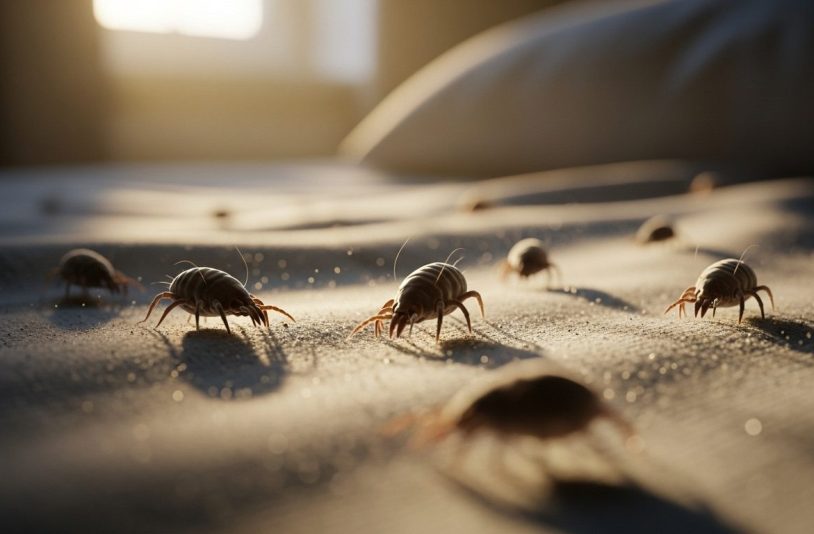
Dust mites are tiny creatures that like to hide in our homes, especially in warm and cozy spots. The tricky thing is you can’t see them, but your nose can tell they’re around. That’s when the sneezing, itchy eyes, and constant sniffles start.
Dust mites are found everywhere, especially in warm areas like beds and carpets. They do not bite, but what they leave behind can cause allergies.
Want cleaner air and fewer allergies? Keep reading to learn how.
Jump to Section [Hide]
What are Dust Mites?
Dust mites are tiny, spider-like creatures. They measure less than 0.5mm and cannot be seen without a microscope. These pests live in warm, humid spaces and feed on dead skin cells from people and pets.
Unlike fleas, dust mites don’t bite. They can trigger allergic reactions, such as sneezing or itching, by releasing proteins from their waste or decaying bodies. Dust mite allergens are active year-round.
About 30% of people may have sensitivities, which can cause issues such as nasal allergies or respiratory problems.
Where Dust Mites Hide
Dust mites love hiding in soft, warm places around your home. They often settle in areas where dust accumulates, such as fabrics and cushions.
Bedding and mattresses
Mites love living in mattresses, pillows, and bed linens. They eat dead skin cells you shed while sleeping. Wash bedding in hot water (130°F or higher) weekly to kill them. Use a hot dryer or dry cleaning for extra protection.
Cover your mattress and pillows with allergen-proof covers. These prevent mites from entering and reduce exposure to allergens. Choose synthetic pillows over wool pillows to reduce mite habitats.
Avoid sheepskin underlays as they attract more mites.
Carpets and rugs
Carpets and rugs hold dust mites, especially shag-pile or long-fiber ones. These fibers trap allergens like pet dander and house dust. Wall-to-wall carpets are the worst for mites, as they thrive in humid conditions.
Vacuum weekly with a HEPA filter to remove allergens. Wash washable rugs often, then dry them outside in direct sunlight. If possible, replace old carpeting with hard flooring such as vinyl or tile.
Steam cleaning is also effective at killing mites deep inside carpets.
Upholstered furniture
Dust mites love upholstered furniture with fabric covers. They hide deep in cushions, seams, and cracks. Regular cleaning helps reduce their numbers.
Vacuum weekly using a HEPA filter vacuum cleaner. Steam cleaning works well, too, since heat kills dust mites. Avoid having this furniture in bedrooms if you have severe dust allergies, as cleaning can stir up allergens for 20 minutes or more afterward.
Leather or wood furniture is a better option to limit mite habitats.
Curtains and fabric blinds
Heavy curtains and fabric blinds trap dust and moisture. This makes them a perfect hiding place for dust mites. Wash them every few months in hot water to kill mites. Dry cleaning is also an option if washing isn’t an option.
Replace long drapes with shutters or smooth, easy-to-clean blinds. Avoid fabric wall hangings near windows. Mites love folds and pleats, so keep things simple and washable!
Stuffed toys and fabric décor
Keep stuffed toys off beds to lower exposure to dust mites. Wash them weekly in hot water at 130°F or higher. If washing isn’t possible, freeze them for 24 hours to kill mites, though this won’t remove allergens.
Choose washable or plastic toys instead of fabric ones for bedrooms. Remove soft toys from rooms if you have a dust mite allergy. Avoid fabric décor items, such as wall hangings and plush decorations, in sleeping areas to limit mite habitats.
Reduce allergens by cleaning blankets and non-encased comforters every two months.
How To Get Rid of Dust Mites
Dust mites can exacerbate allergies and irritate the skin. You can take simple steps to lower their numbers at home—start with cleaning routines and changes in your space!
Wash bedding in hot water weekly
Wash your bedding every week in hot water. Keep the temperature at least 130°F (54.4°C). This kills dust mites and removes allergens, including animal dander and mold spores. Use commercial cold-water detergents if hot water isn’t available.
You can also tumble dry sheets, blankets, and pillowcases on high heat for 15 minutes.
If you have mite-resistant covers, wash them every two months to maintain protection. Non-encased items such as doonas or comforters should also be cleaned every two months. Dry cleaning is another practical choice for delicate fabrics that cannot handle high-heat washing.
Use dust mite-proof covers for pillows and mattresses
Cover your pillows and mattresses with dust mite-proof covers. These zippered covers block mites and allergens from getting inside. They act as a barrier, keeping you safe from particles that can trigger respiratory or nasal allergy symptoms.
Choose allergen-proof bedcovers made of synthetic materials instead of wool or sheepskin. Replace the covers every two months, or follow the maker’s advice. The American College of Allergy, Asthma & Immunology recommends these for long-term dust mite control.
Vacuum with a HEPA filter regularly
Use a vacuum with a HEPA filter once a week. It traps dust mites and allergens more effectively than standard vacuums. Focus on carpets, rugs, and upholstered furniture where mites settle. A vacuum mattress seems to remove hidden mites.
Wear an N95 mask while cleaning to protect yourself from airborne dust.
Avoid the cleaned room for two hours if you have severe allergies, as vacuuming can stir up allergens. Run your HVAC system with MERV 11 or 12 filters for stronger air filtration. Change all filters every three months for best results.
Dust surfaces constantly after vacuuming to capture residual particles.
Steam clean carpets, curtains, and upholstery
Steam cleaning kills dust mites and removes their allergens. High temperatures destroy these pests deep within fabrics that vacuums can’t reach. This method works well for carpets, curtains, and upholstery.
It is also chemical-free, making it safer for homes with allergies.
Treat your carpets and furniture regularly to keep dust mites under control. Curtains benefit too, as steam can clean folds where mites hide. Always check fabric care labels to avoid damage during cleaning.
Reduce indoor humidity below 50%
Keep the humidity in your home below 50%. Use a dehumidifier or air conditioning to control moisture. A hygrometer helps you check the levels. Dust mites prefer humid environments, so keeping it dry helps them leave.
Vent bathrooms and kitchens to stop moisture buildup. Repair leaks promptly to prevent damp areas. Avoid using evaporative coolers since they add water to the air. Proper insulation also keeps moisture out of your home.
Minimize clutter to limit dust buildup
Clear out knick-knacks, books, and magazines from bedrooms. These items collect dust fast. Store belongings in closed containers to keep dust away.
Dust with a damp or microfiber cloth instead of a feather duster. This traps allergens rather than dispersing them into the air. Reduce decorative fabric items, such as throws and pillows, to reduce hiding places for mites.
Remove or limit carpeting where possible
Carpeting traps dust mites and allergens. Hard flooring, such as tile or vinyl, is better for allergy-prone homes. If possible, remove wall-to-wall carpeting, especially in bedrooms. Use washable rugs instead, and clean them weekly.
Dry them outside under the sun to kill mites.
Vacuum carpets regularly using a HEPA-filter vacuum if removing them isn’t an option. Shag-pile and long-fiber carpets are hotspots for mites; avoid them. Damp-mop hard floors to reduce dust buildup.
This helps keep indoor air cleaner and safer from allergens such as dust mite particles.
Wash or freeze soft toys and fabrics
Wash soft toys weekly in hot water at 130°F or higher. If washing in cold water, use commercial products to kill dust mites. Dry cleaning is also a good option for these items.
Freezing soft toys for 24 hours kills the mites, but their allergens stay behind. Remove stuffed animals from the bedrooms of allergy sufferers. Choose washable toys for easier care and cleanup.
Use air purifiers with HEPA filters
Place air purifiers with HEPA filters in your bedroom and living room. These filters trap particles as small as 0.3 microns, including dust mite allergens.
Replace the purifier filters every three months to ensure proper operation. Pairing HEPA air purifiers with regular cleaning reduces indoor allergens and helps you breathe more easily at home.
Products That Help Control Dust Mites
Specific tools, such as specialized bedding and air cleaners, make it easier to fight dust mites—check them out for a cleaner home.
HEPA air purifiers
HEPA air purifiers trap tiny airborne particles, including dust mite allergens. These filters capture particles as small as 0.3 microns, helping reduce allergy symptoms such as a runny nose or itchy eyes.
Place them in bedrooms and living rooms for better results. Replace the HEPA filter every three months to ensure it continues to perform effectively. Use them with allergen-proof covers on your bedding and regular cleaning to control dust mites more effectively.
Dehumidifiers
A dehumidifier helps you control indoor humidity. Keep it below 50% to stop dust mites from thriving. Use a hygrometer to check the levels regularly for accuracy. Dehumidifiers are essential in humid areas or damp homes.
They prevent moisture buildup, which also controls mold.
Run your dehumidifier daily in poorly ventilated spaces, such as basements or small rooms. Pair it with air conditioning for better results. Clean and maintain your machine regularly to ensure it works properly over time.
By reducing humidity, you create a healthier environment free of allergens such as dust mites and mold growth.
Hypoallergenic and encased bedding
Choose hypoallergenic bedding to reduce dust mites. Use pillows and comforters made of synthetic materials, not wool or sheepskin. Wash them often to keep them clean.
Add zippered, allergen-proof covers to your mattress and pillows. These covers block dust mites from getting in. Replace or wash these encasements every two months for the best results.
Anti-allergen sprays and treatments
Anti-allergen sprays can reduce dust mite allergens on surfaces such as bedding, carpets, and curtains. Spray them directly as instructed for better results. These sprays work well with regular cleaning methods, such as vacuuming or washing fabrics in hot water.
You can find these sprays online or at pharmacies. Some are used during routine cleanups to improve efficiency. They won’t remove all mites, but they will help reduce allergen levels. Pair them with humidity-control measures and weekly washes for optimal results.
Lifestyle Changes for Long-Term Prevention
Make small changes to keep dust mites away. Simple habits can make your home cleaner and help you breathe better.
Regular cleaning schedule
Stick to a weekly cleaning routine. Vacuum floors, rugs, and furniture using a HEPA filter vacuum. Dust surfaces with a damp cloth to trap particles instead of spreading them.
Wash bedding in hot water every week. Clean curtains, blinds, and soft furnishings often. Replace HVAC air filters every three months to improve air quality. Keep clutter to a minimum to reduce dust buildup.
Use washable curtains or blinds
Choose washable curtains or blinds for your windows. Clean them every few months to prevent dust mites. Heavy drapes trap more dust, so switch to lighter, washable options instead.
Wash or dry clean them at 130°F or higher when possible.
Blinds are easier to maintain and clean with a damp cloth often. If you store window treatments, wash them before putting them back up. Avoid fabric wall hangings that gather dust unless they’re easy to launder.
These steps effectively reduce allergens in your home.
Choose furniture with smooth surfaces
Pick furniture made of leather, vinyl, plastic, or wood. These smooth materials don’t trap dust mites as fabric does.
Wipe these hard surfaces with a damp or microfiber cloth often. Avoid upholstered items in main living spaces and bedrooms. Replace fabric chairs or cushions with easy-to-clean options.
Smooth furniture helps you better control allergens, as experts recommend.
Avoid fabric wall hangings and unnecessary textiles
Dust mites love fabric wall hangings and heavy textiles. These items collect dust and are hard to clean. Switch to decorative pieces made of metal or wood instead. Use simple, smooth surfaces that wipe clean easily.
Remove rugs, throws, and extra cushions from allergy-prone rooms. Replace fabric lampshades with plastic or metal ones. Store old clothes in sealed containers, and wash them before wearing them again.
Focus on washable décor to keep your home cleaner and free of allergens like dust mites!
When To Seek Professional Help
If your allergies worsen or don’t improve, it might be time to seek expert help. A health professional can recommend treatments such as allergy medications or tests to identify triggers.
Persistent allergy symptoms
Persistent symptoms such as sneezing, congestion, and itchy eyes may indicate dust mite allergies. You could also notice skin rashes or wheezing that won’t go away. If this happens, track your symptoms carefully.
Write down when they occur and what makes them worse.
Doctors may recommend an allergy skin test that provides results in 15 minutes, with mild side effects resolving within 30 minutes. Allergy blood tests work if you have sensitive skin or take certain medications.
They might also check your nasal lining for swelling or a pale color. Bring notes on family history, current medications, and major triggers to help the doctor determine treatment options, such as allergy shots or medications like Flonase Allergy Relief or Singulair.
Suspected severe infestation
Large numbers of dust mites may need professional help. If you notice thick dust buildup or persistent allergy symptoms, contact deep cleaning services. Experts use special tools to remove mites and allergens.
Water damage or high humidity can exacerbate infestations. You may need allergen testing to identify problem areas, such as carpets or drapes. An allergist can also recommend treatments for severe allergic reactions caused by the mites.
Help with deep cleaning or allergen testing
Professional cleaning services can handle deep cleaning tasks. They use HEPA-equipped machines and special treatments to remove dust mites, allergens, and dirt. You may need this after events like flooding or home renovations.
Professionals also help reduce allergens by steam cleaning carpets, mattresses, and fabrics.
Allergen testing checks for dust mite levels in your home. Certified experts test different areas to identify problem spots. This guides you on what needs attention for better results.
If allergies persist or are severe, insurance might cover professional services for cleaning or testing.
Final Tips
Dust mites can be challenging to manage, but small steps can make a significant difference. Wash your bedding weekly, clean it often, and air-dry it. Use tools such as HEPA vacuums and air purifiers to improve control.
Make changes step by step to see results over time. You can create a cleaner and healthier home!